




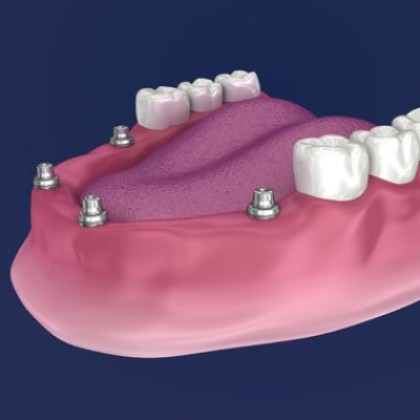


Traditional tooth replacement methods often require grinding or reshaping healthy adjacent teeth to support a conventional bridge. This approach is generally considered only when more conservative treatment options are not suitable.
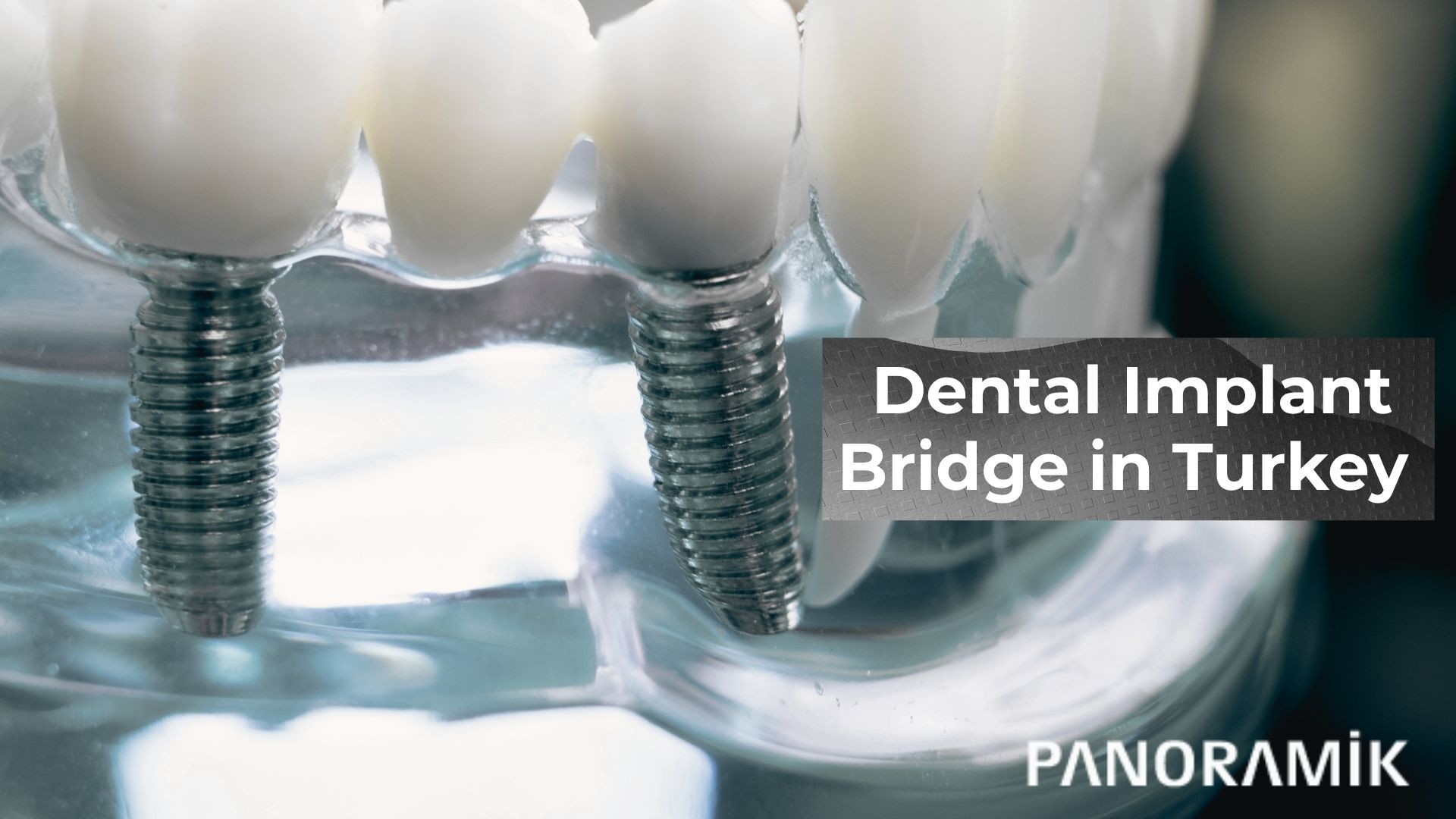
With an implant-supported bridge, there is no need to grind or cut the neighbouring teeth. Instead, the bridge is securely anchored to dental implants, preserving the natural tooth structure while restoring both function and aesthetics. This minimally invasive approach also helps maintain the health of the surrounding teeth and tissues.
What is an implant-supported bridge?
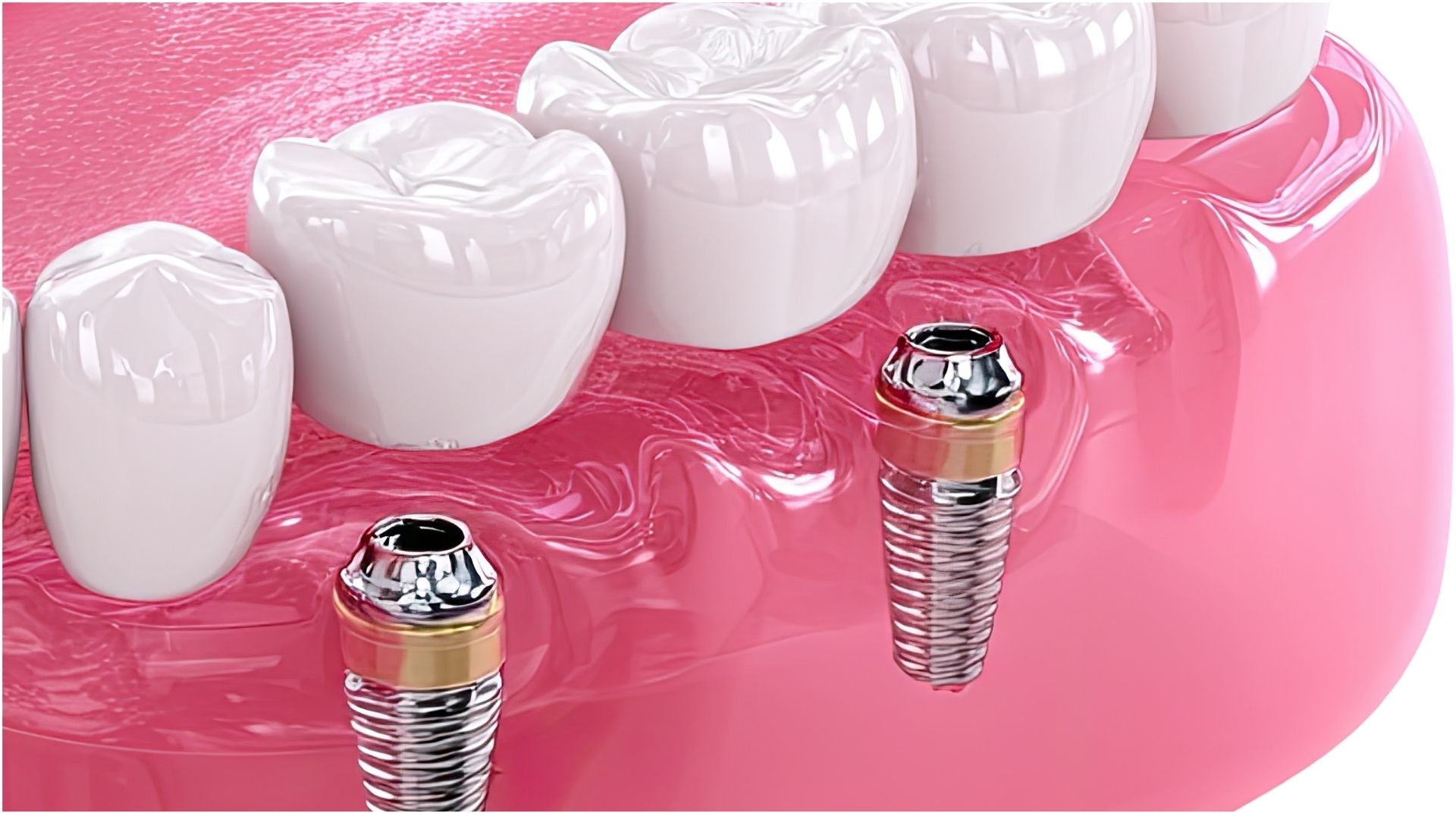
An implant-supported bridge is a fixed dental restoration supported by two or more dental implants instead of natural teeth. In many cases, two implants can support a bridge replacing three or four consecutive missing teeth, providing excellent stability while preserving the surrounding healthy teeth. With this bridge treatment, there is no need to place a separate implant for each tooth. With a bridge between two implants, the patient achieves the desired result both functionally and aesthetically.
How is dental implant bridge treatment performed?
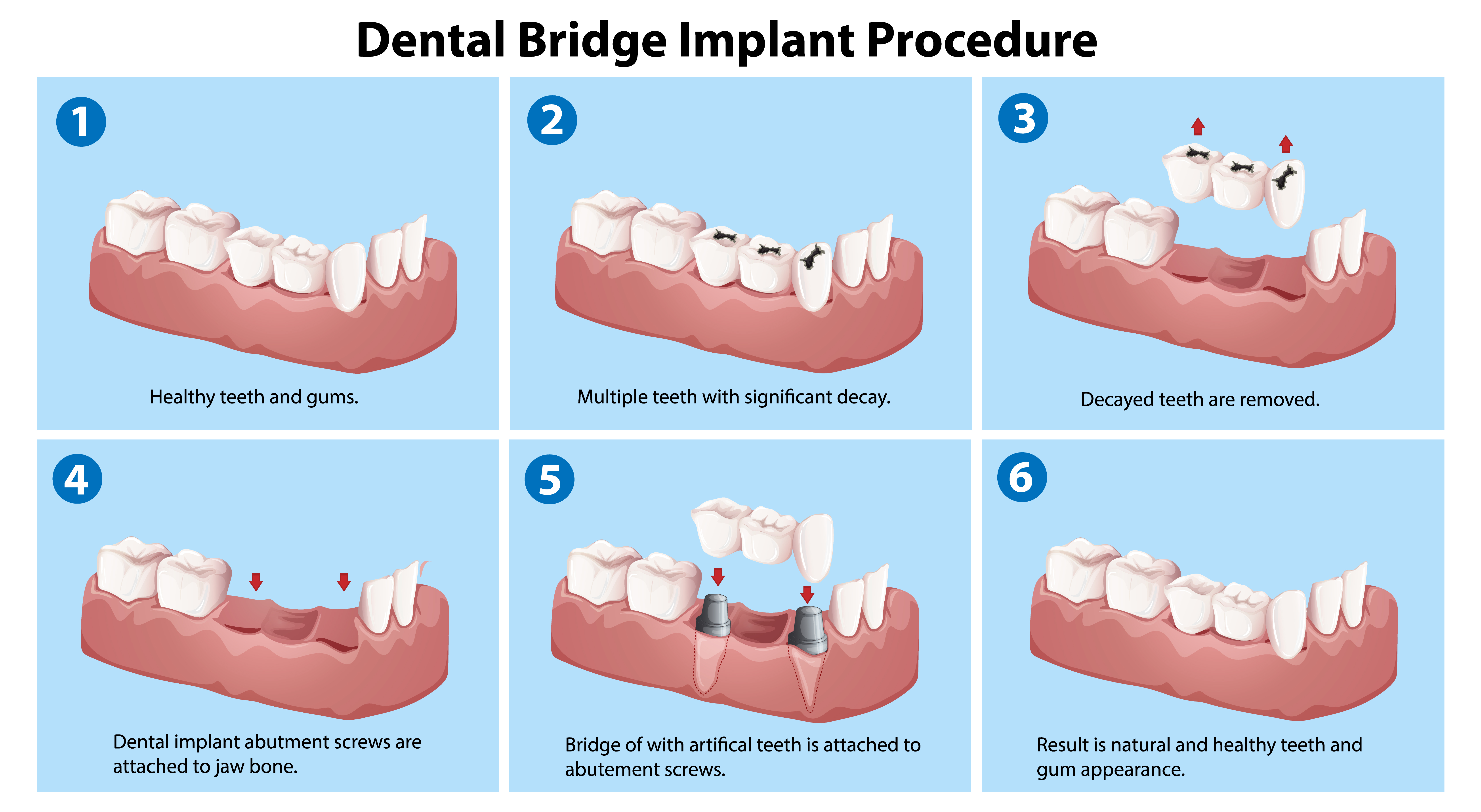
- First, a comprehensive dental examination and digital imaging are performed.
- Following the examination, dental implants are surgically placed into the areas of the missing teeth.
- Once the implant placement phase is complete, impressions of the jaw structure and teeth are taken.
- The final restoration is digitally designed to ensure a precise fit.
- The custom bridge is then fabricated in a dental laboratory.
- Depending on the treatment plan, the final implant-supported bridge is fitted after the implants have fully integrated with the jawbone. In selected cases, an immediate temporary restoration may be provided.
Benefits of an Implant-Supported Bridge
- Preserves healthy adjacent teeth
- Prevents potential tooth shifting.
- Prevents gum and bone loss.
- Traditional bridges require healthy adjacent teeth to be prepared, increasing the long-term risk of decay or structural damage to those teeth.
- Eliminates the need for removable dentures.
- Does not harm the surrounding teeth.
Who is a good candidate for an implant-supported bridge?
For patients with several consecutive missing teeth and enough healthy jawbone to support dental implants, an implant-supported bridge is a great choice. It's especially ideal for those seeking a fixed, durable solution without the need to grind down healthy neighbouring teeth. A thorough dental examination and 3D imaging will help determine whether this treatment is suitable.
Implant-Supported Bridge vs Traditional Dental Bridge
The key difference lies in how the bridge is supported. A traditional dental bridge relies on neighbouring natural teeth, which often need to be reshaped. An implant-supported bridge is anchored directly to dental implants, helping preserve healthy teeth while providing greater stability, improved chewing function, and better long-term bone preservation.
Implant-Supported Bridge vs Dental Implants
A single dental implant is designed to replace one missing tooth with one implant and one crown. An implant-supported bridge replaces multiple missing teeth using fewer implants than the number of teeth being replaced. In many cases, two implants can support a bridge that replaces three or four consecutive teeth, making this approach both efficient and cost-effective.
Recovery after an implant-supported bridge procedure
After implant placement, most patients experience mild swelling and discomfort for a few days. Normal daily activities can usually be resumed within a few days, although complete healing and osseointegration typically take three to six months before the permanent bridge is fitted. Following your dentist's aftercare instructions is essential for a smooth recovery.
How to care for an implant-supported bridge?
Maintaining good oral hygiene is essential for keeping an implant-supported bridge in excellent condition. Brush twice a day with a soft-bristled toothbrush, clean underneath the bridge using floss threaders or interdental brushes, and consider using a water flosser. Regular professional cleanings and routine dental check-ups are also important for long-term success.
Why choose Turkey for an implant-supported bridge?
Turkey has become one of the world's leading destinations for implant dentistry thanks to its experienced dentists, state-of-the-art clinics, and affordable treatment costs. Patients benefit from internationally recognised implant systems, advanced digital technologies, personalised treatment plans, and significant cost savings compared with many countries in Europe and North America, while maintaining high standards of care.
Panoramik Dental Health Clinic in Antalya for Dental Implant Bridge
At Panoramik Dental Health Clinic in Antalya, experienced implant dentists provide personalised treatment plans using advanced digital technology and internationally recognised implant systems.
What is the cost of dental implant bridge in Turkey, Antalya?
The Panoramik Oral and Dental Health Clinic in Antalya manages the treatment process by prioritizing the importance of accurate diagnosis, planning, and treatment in oral and dental health. The team of specialist dentists and experienced staff at Panoramik Oral and Dental Health Clinic provides personalised care and customised treatment plans for every patient.
The cost of an implant-supported bridge in Antalya depends on several factors, including the number of implants required, the type of bridge material, and whether additional procedures such as bone grafting are needed. At Panoramik Oral and Dental Health Clinic, every patient receives a personalised treatment plan following a comprehensive clinical examination.
Frequently Asked Questions
An implant-supported bridge can replace one or several missing teeth. Depending on the location and amount of available bone, two dental implants are often sufficient to support a bridge replacing three or four consecutive missing teeth, eliminating the need to prepare healthy adjacent teeth.
Yes. Implant-supported bridges are an excellent option for replacing multiple missing teeth. Unlike traditional bridges, they are anchored directly to dental implants rather than neighbouring teeth, preserving healthy tooth structure while providing excellent stability and chewing function.
With proper oral hygiene and regular dental check-ups, implant-supported bridges can last 15-20 years or more. Dental implants themselves may last a lifetime, while the bridge restoration may eventually require maintenance or replacement due to normal wear.
No. One dental implant is not required for every missing tooth. In many cases, two implants can securely support a bridge replacing three or four consecutive teeth. This approach reduces treatment costs while providing a stable, functional, and natural-looking restoration.